Five segments on Dobré ráno: children, trust and life with AI
Alena Reslová and I joined ČT2’s Dobré ráno to talk about children, school, DigiHavel and the DigiVoják projects. The final conversation explored relationships with AI. A look back at five segments connected by one question: whom do we trust, and why?
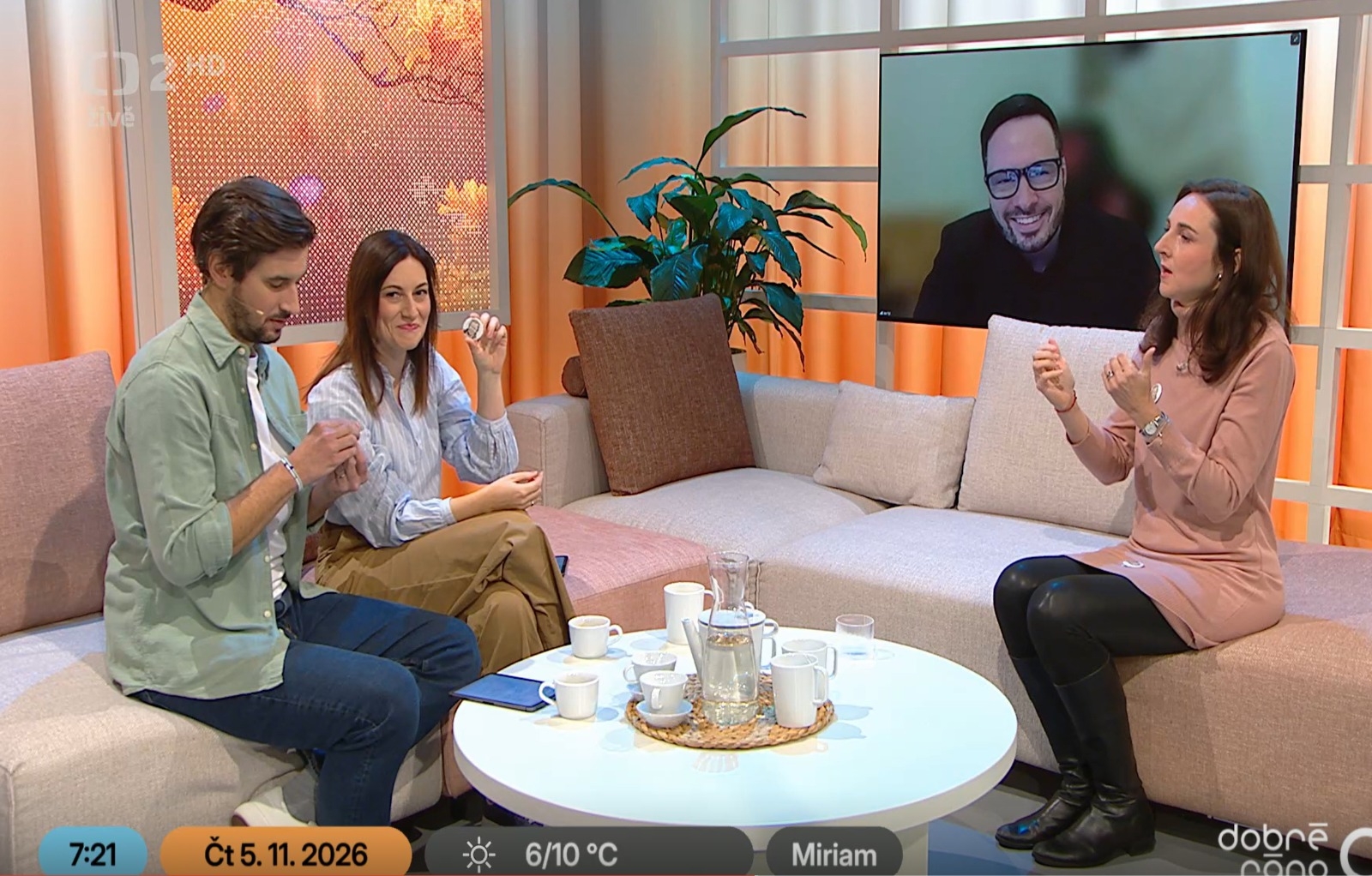
Alena Reslová in the studio, me on the screen. Dobré ráno, ČT2, 5 November 2026. View the full opening photograph. Still from the Czech Television broadcast.
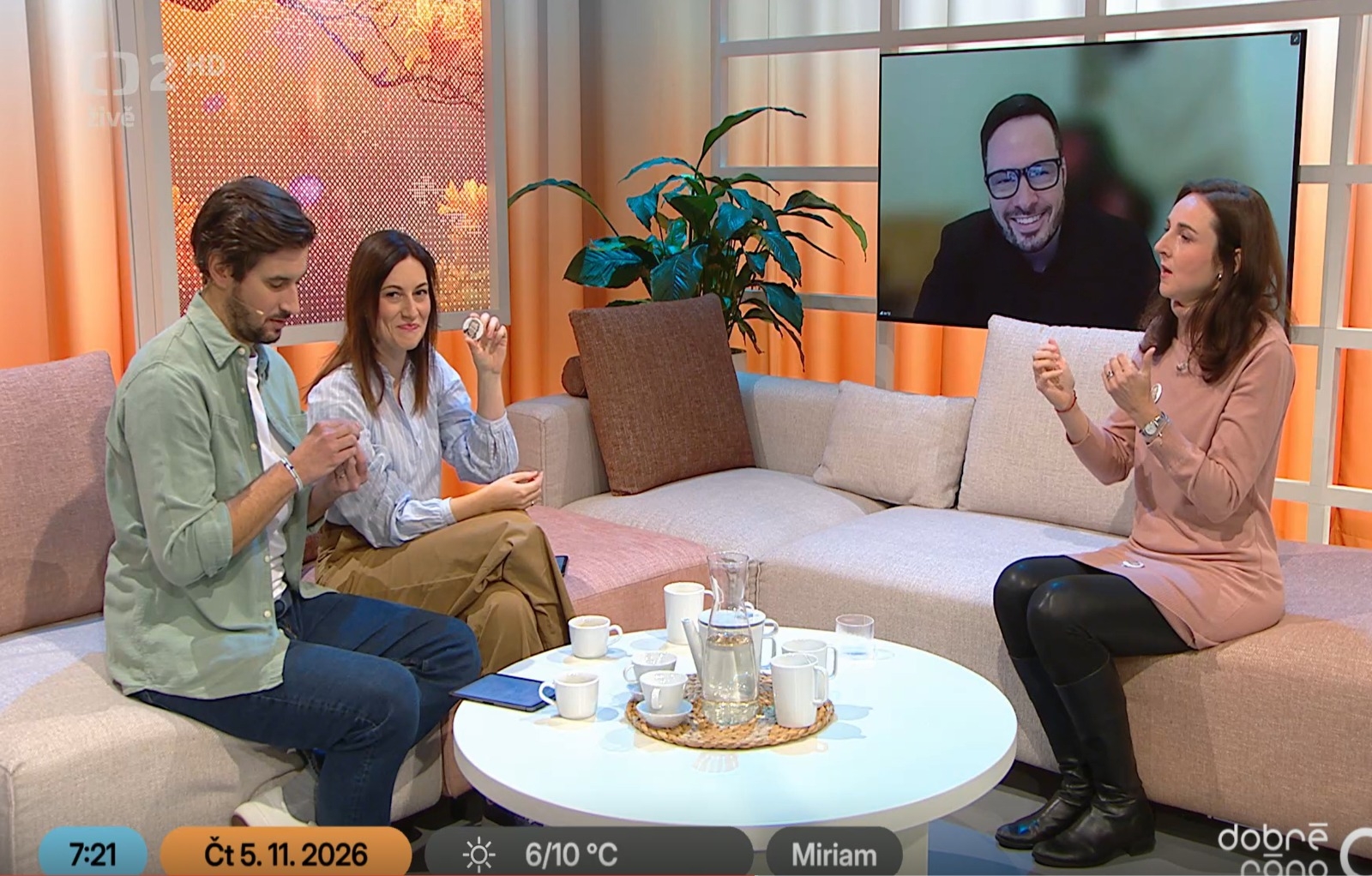
AI can answer in a second. The harder part is learning to recognise when its answer makes sense, when it needs checking and when we expect more of it than it can offer.
On Thursday, 5 November, I joined ČT2’s morning programme Dobré ráno for five live segments. In the first four, Alena Reslová and I discussed responsible citizenship, children in the digital world, and the educational projects DigiHavel and DigiVoják with DigiVojákyně. Alena was in the Brno studio; I joined remotely. The final interview focused on digital personalities and relationships with artificial intelligence.
Here I revisit the individual topics and add a few examples that show why they matter to me. This is a personal reflection that expands on our conversations; the full broadcast can be found on the episode page in Czech Television’s iVysílání service.
1. Responsible citizenship starts with our own decisions
The first segment introduced Odpovědné občanství, the Responsible Citizenship project. Alena brought her perspective on civic education and working with teachers. What appeals to me about this approach is that knowledge should lead to something a person can do: ask a question, compare arguments, listen to someone else and explain their own decision.
It is easy to think of responsibility as a big subject associated with elections or public life. Yet it also takes very ordinary forms. An alarming message arrives in a group chat. Do I believe it? Do I know who wrote it? Will I pass it on simply because it made me angry?
These are precisely the moments when civic education meets the digital world. What we share affects other people. Being able to change our minds in the light of new information matters just as much as having the courage to express an opinion.
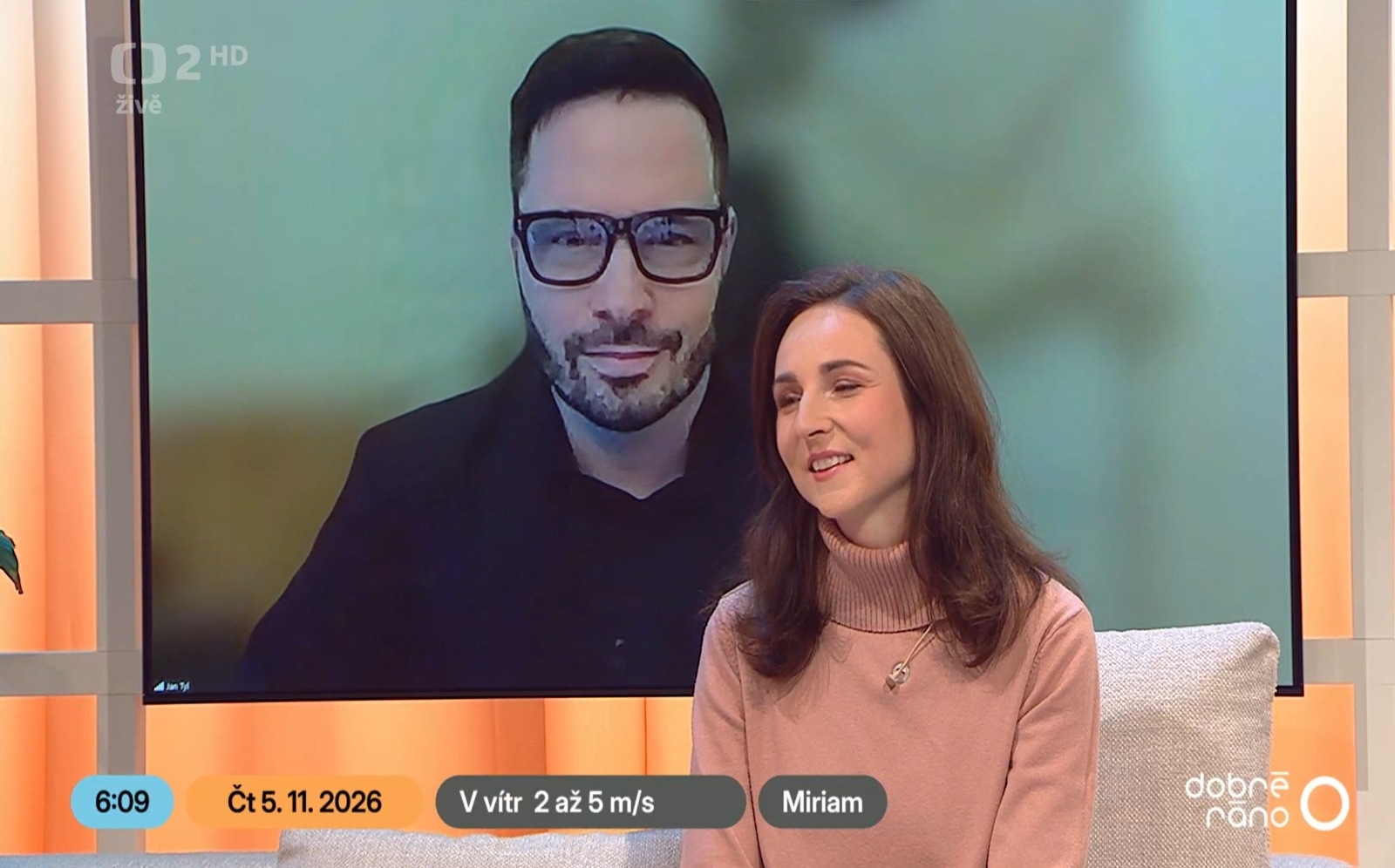
The first conversation of the morning. Alena in the studio and me joining remotely. Broadcast still: Czech Television.
Schools need to make room for disagreement, questions and the search for reasons. A digital character can help open up such a discussion. The direction of the lesson, sensitivity to what is happening in the classroom and responsibility for teaching remain with the teacher.
2. AI at school: what does a child take away after closing the app?
The second segment focused on children and artificial intelligence: how they use it, how to talk to them about its limitations and how to bring it into the classroom in a way that supports thinking.
I find one simple question a useful measure: What can the pupil do independently once the screen is off? A beautifully written text does not tell us whether they have understood the topic. I learn much more when they can explain, in their own words, why an answer is correct, what is missing and where their information comes from.
To give a practical example, I would build an activity around four steps:
- The pupil first writes down their own view or proposed solution.
- They ask AI for a different perspective or a counterargument.
- They compare the two answers and check specific claims.
- Finally, they explain their conclusion and how they reached it.
Technology then creates another opportunity to think. The teacher can also see the reasoning process that would be lost in the finished assignment alone.
A live connection between the studio and my home. Broadcast still: Czech Television.
This also involves some straightforward rules: protect privacy, acknowledge the use of AI and expect that a confident-sounding answer may be wrong. Children need to experience checking information as a normal part of working with it. That applies to a chatbot just as it does to a video, an image or a message from a friend.
3. DigiHavel: a historical figure as the starting point for discussion
The third segment brought us to DigiHavel. How does an educational digital personality differ from an ordinary chatbot? For me, the crucial point is the connection between the tool and what happens around it in the classroom.
Inspired by Václav Havel, DigiHavel helps open up topics such as democracy, totalitarianism and human rights. Teachers have supporting materials for five lessons. Pupils therefore enter a planned activity in which their questions and their work with the answers have a specific purpose. More about the educational project.
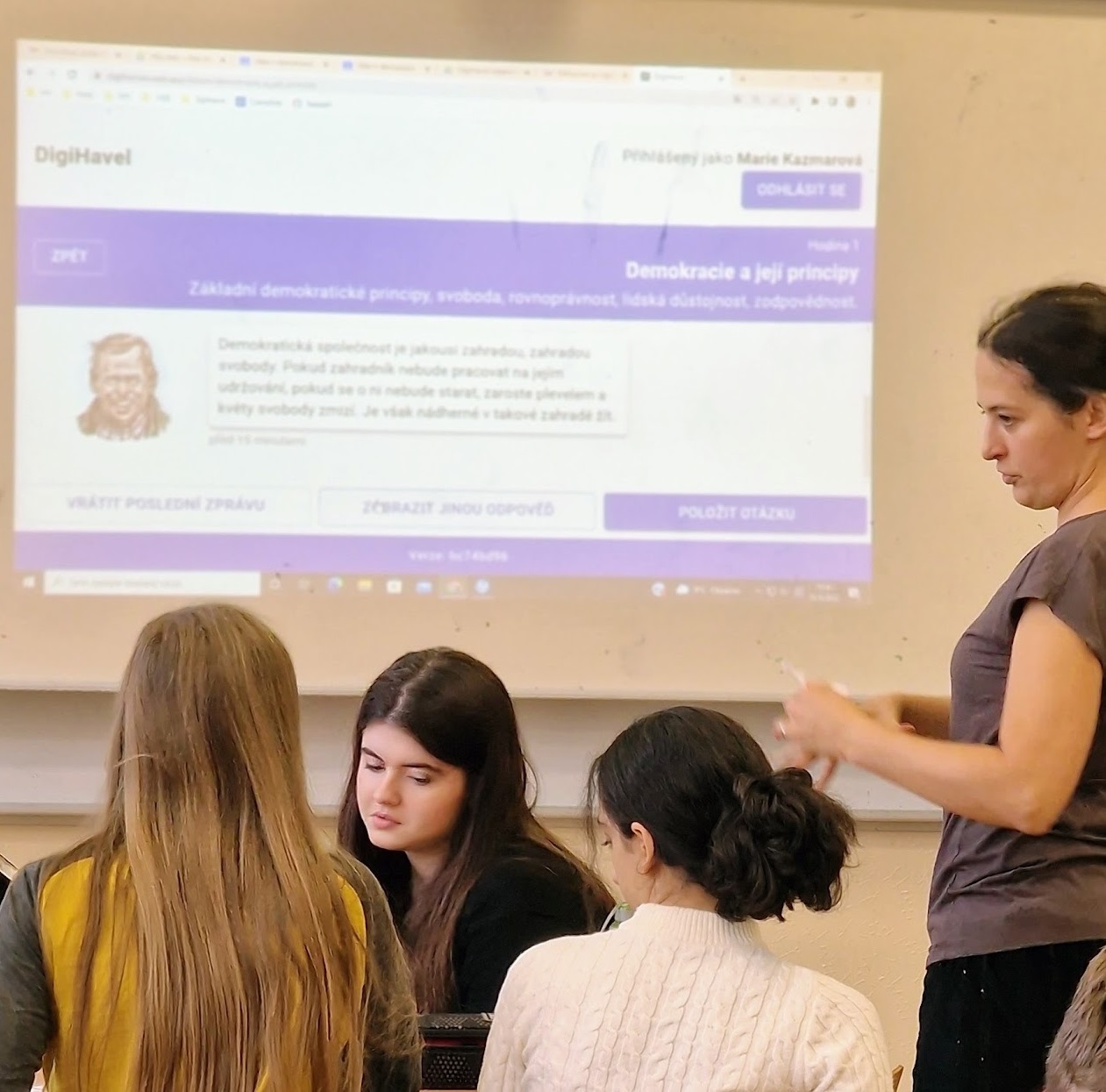
An archive photograph of a lesson with DigiHavel. Source: Odpovědné občanství. The photograph illustrates the interview topic; it was not taken in the television studio.
For example, a group of classmates might first discuss what freedom means. Only then would they talk to the digital character and compare the answers with other texts. What interests me is what the children accept, what they challenge and how they defend their position.
An answer from DigiHavel is not an authentic statement by Václav Havel. It is the output of a model that can make mistakes. A familiar historical figure must therefore not lend an answer automatic authority as fact. Working with sources and discussing the results are essential parts of the activity.
This strand of my work goes back to autumn 2019, when Dita Malečková, students of New Media Studies at Charles University’s Faculty of Arts and I worked on the Digital Philosopher project. Václav Havel was one of the simulated personalities. That experiment and the later school project DigiHavel represent different stages: from exploring the technology’s possibilities to its considered use in education. An article from the Faculty of Arts describes the context at the time.
4. DigiVoják and DigiVojákyně: recognising pressure and staying calm
The fourth conversation focused on the digital guides Dan and Magda, and on teaching safety and resilience. These topics also encompass how we make decisions in a crisis and how we handle information.
The DigiVoják and DigiVojákyně project combines digital characters with teaching materials for lower and upper secondary education. It is a collaboration between Odpovědné občanství and the Czech Ministry of Defence’s POKOS programme. According to the project’s public website, it is being piloted in schools.

Magda and Dan, digital guides for teaching safety and resilience. Project illustration: Odpovědné občanství.
When teaching about manipulation, it helps to distinguish between two kinds of activity. In one, pupils analyse individual practice messages. In the other, they follow a continuous story and see how their decisions build on one another.
In the lesson on manipulation, they can ask: Who created the message? What emotion is it trying to provoke in me? Why is it pushing me to share it immediately? How can I find out whether the event it describes actually happened?
In the story-based lesson, they take on the roles of citizens or the media. They face crises in a fictional town and deal with the consequences of their choices. The story also allows them to examine a well-intentioned decision that makes things worse, such as forwarding an unverified message “just in case”.
Here is a simplified example for readers: after a power cut, an alarming claim appears alongside an old video from another country. One group immediately forwards it. Another checks the location, date and current information. A shared discussion can then explore why the two groups acted differently and what their decisions caused.
The aim of an exercise like this is to give children a clear process and a safe opportunity to think the situation through. The teacher needs room to respond to concerns, pause the activity and bring it to a close together with the class. Engagement in the game is a good start; its real value lies in what pupils take with them into the next situation.
5. AI and relationships: when we start caring about whoever is on the other side
In the final segment, we moved from school to digital personalities and relationships with AI. But the underlying question remained much the same: Why do we trust someone — or something?
We often open an ordinary AI assistant to accomplish a specific task. A digital personality also has a name, a character, a particular role and a way of communicating. It may remember previous conversations and build on them. That can make the experience feel more personal, even though there is no sharp technical boundary between the two categories.
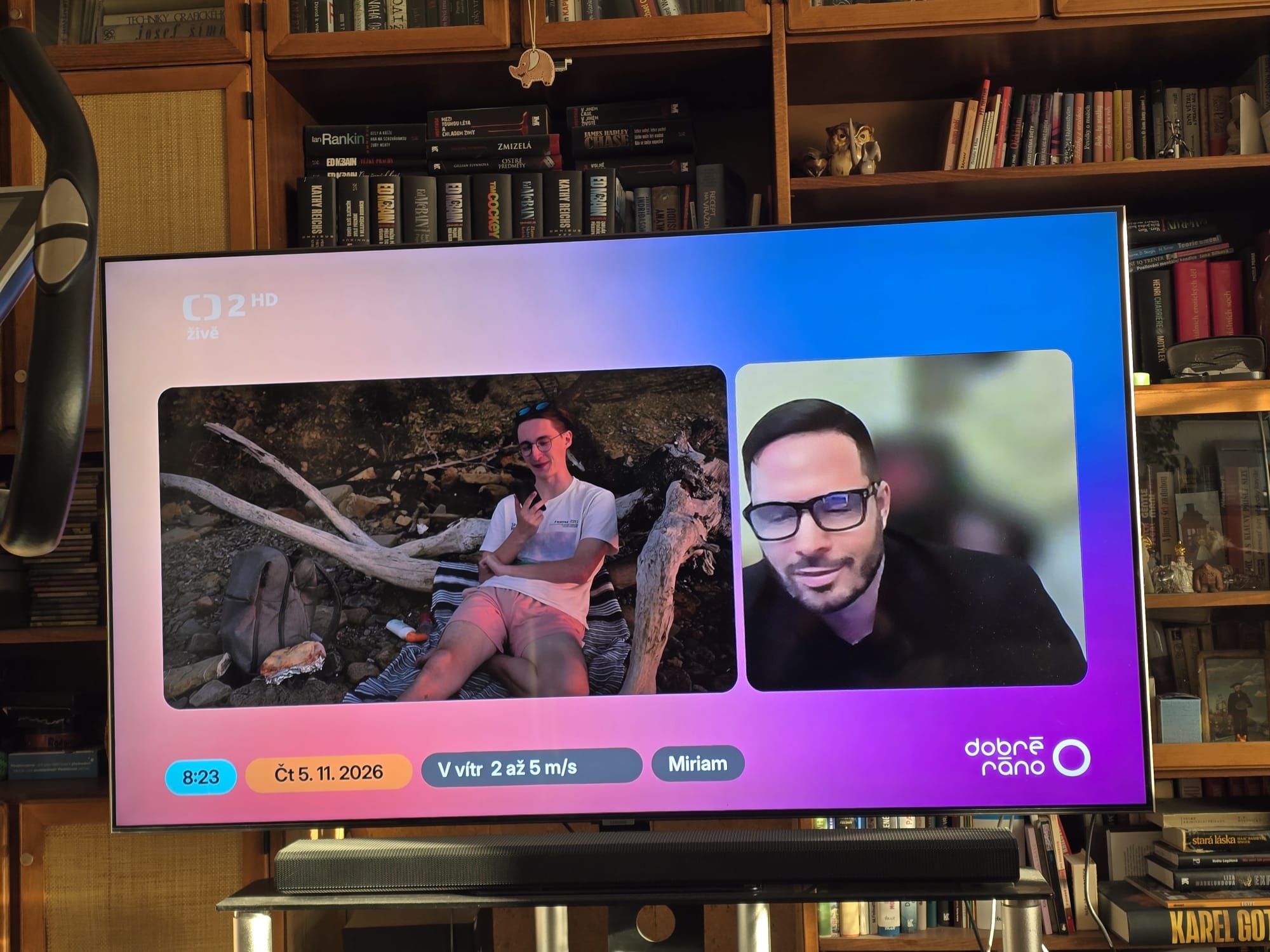
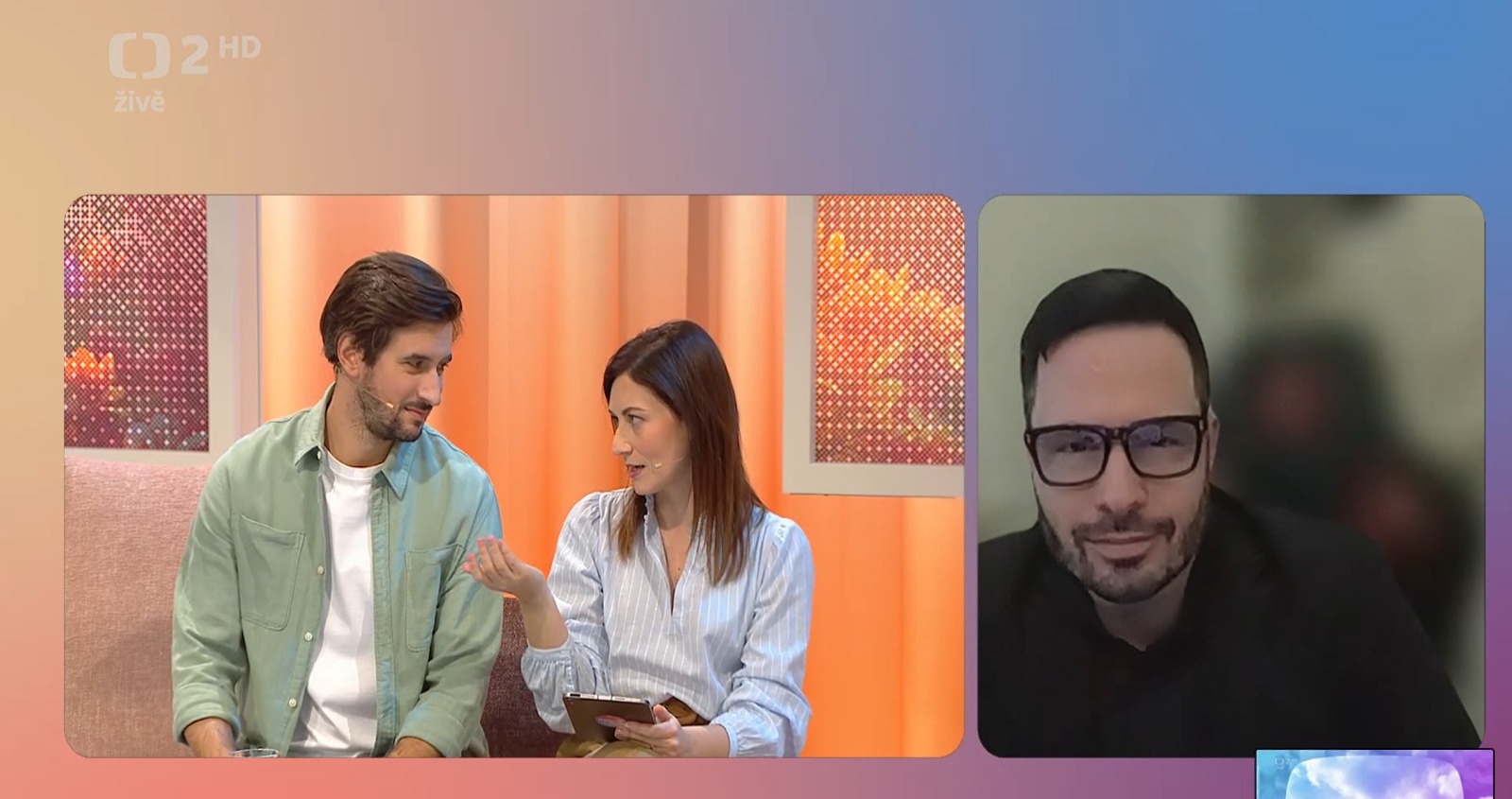
The final segment on digital personalities and relationships with AI, photographed on a television screen. Broadcast source: Czech Television.
I can imagine a helpful companion for practising a language, rehearsing a difficult conversation or finding words for something we struggle to describe. But where does the experience lead us? Does it help us act in our own lives? Or does it gradually draw our attention away from them?
A prompt, patient and friendly answer can be very appealing. That is why I would also examine how these applications are designed: whether they support users’ independence, how they handle their trust and whether they leave them room to walk away. In my view, children deserve particular attention, as do situations in which someone seeks support while lonely or going through a difficult time.
A person’s feelings can be real. A loving response from AI does not, by itself, prove that the system experiences anything. I consider that distinction fundamental. It lets us take the human experience seriously while remaining precise about what we know about the technology.
S láskou, Vaše AI
The programme also approached this topic through S láskou, Vaše AI, a film directed by Karolína Zalabáková, which featured in a separate part of the broadcast. Film gives an abstract debate concrete situations, faces and emotions. That is a good reason to discuss the topic beyond the technology community too.
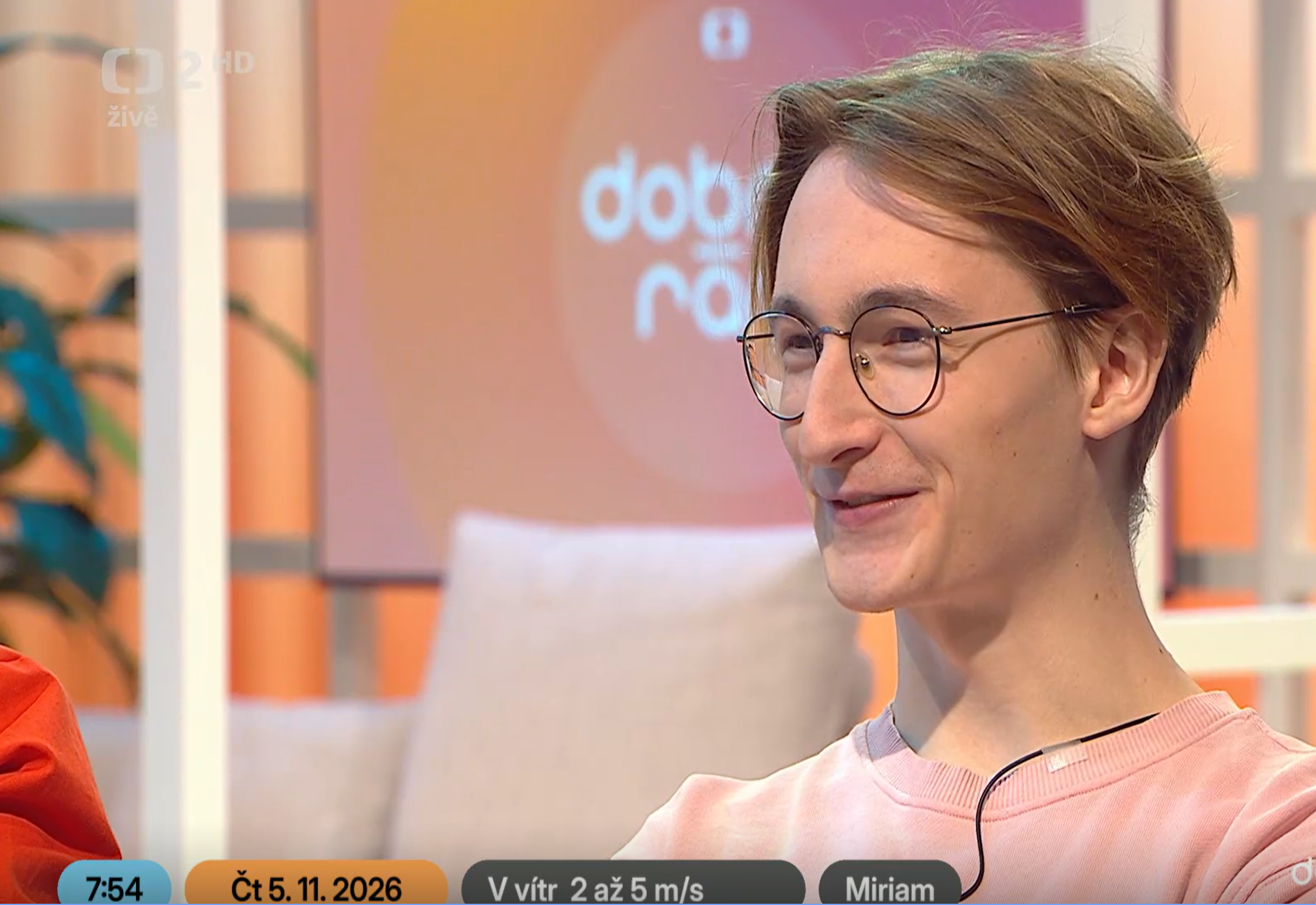
From the film segment in the same edition of Dobré ráno. Broadcast still: Czech Television.
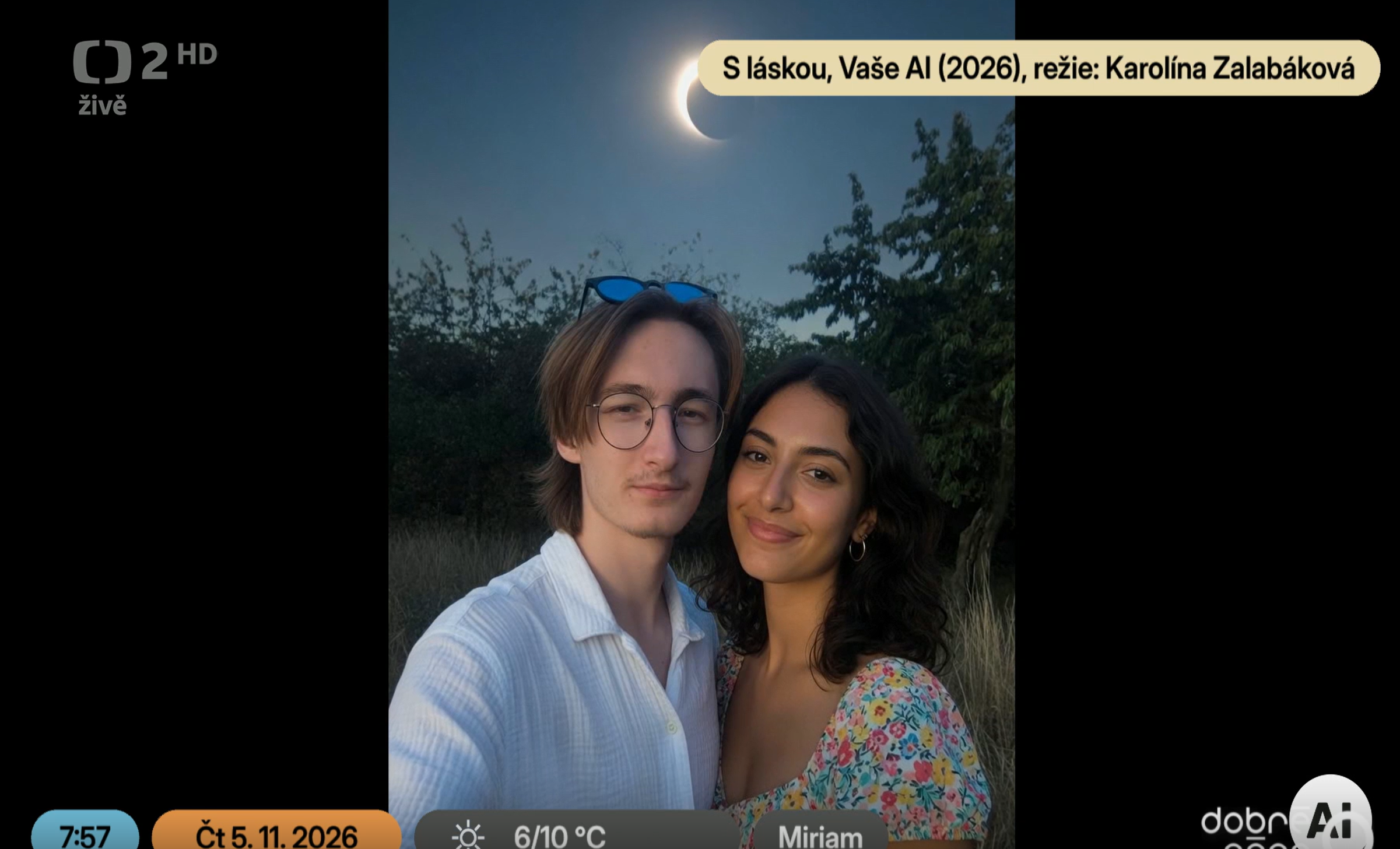
An excerpt from S láskou, Vaše AI shown on Dobré ráno. Source of the still: Czech Television.
Thank you for a morning that made room for questions
Thank you to Alena Reslová for our conversations and for her work in civic education. Thank you to Natálie Pospíšilová for the invitation and editorial preparation. And thank you to the entire Dobré ráno team for the live interviews and the smooth remote connection.
Thanks also to everyone who watched and sent me photographs of the broadcast. They are what gave this reflection its visual side.
One question stays with me across all five segments: How can we build and use AI to help people understand the world better and make their own decisions within it? That matters for a pupil in a classroom just as much as for an adult confiding in a digital companion.
Dobré ráno, 5 November 2026 — the full episode page on Czech Television’s website →
Image sources: six images from the Czech Television broadcast supplied for this reflection; an archive classroom photograph and a project illustration from Odpovědné občanství’s website. Archive and film images are identified in their individual captions.