When a Supercomputer Runs AI and Heats a City
I ran the first tests of my AI evaluation project on Finland's LUMI supercomputer. Phase 0 showed a simple lesson: one prompt does not use a supercomputer, but thousands of prompts do.

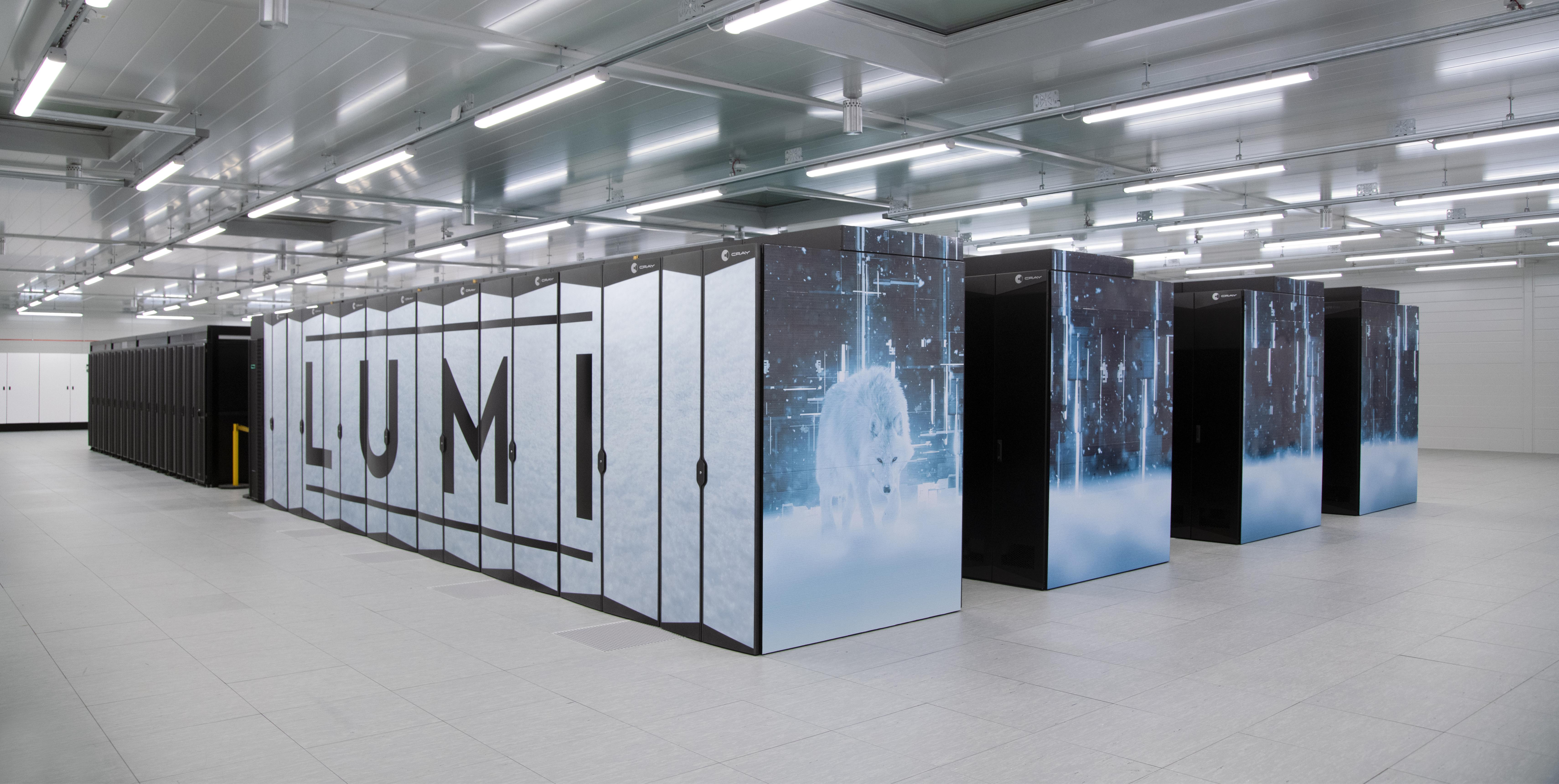
In the Finnish city of Kajaani stands one of Europe's most interesting supercomputers. It is called LUMI, it is part of the EuroHPC infrastructure, and it is operated by CSC - IT Center for Science. LUMI is an HPE Cray EX system with roughly 380 petaflops of sustained HPL performance.
What fascinates me about LUMI is that it is not only a huge computing hall somewhere in northern Europe. It is also a very concrete example of what more sustainable supercomputing can look like. LUMI runs on renewable energy, and its waste heat is reused in the district heating system of Kajaani.
That is almost poetic: a supercomputer runs climate models, scientific simulations, or artificial intelligence, and the heat from those calculations returns to the city. Not as waste, but as useful energy.
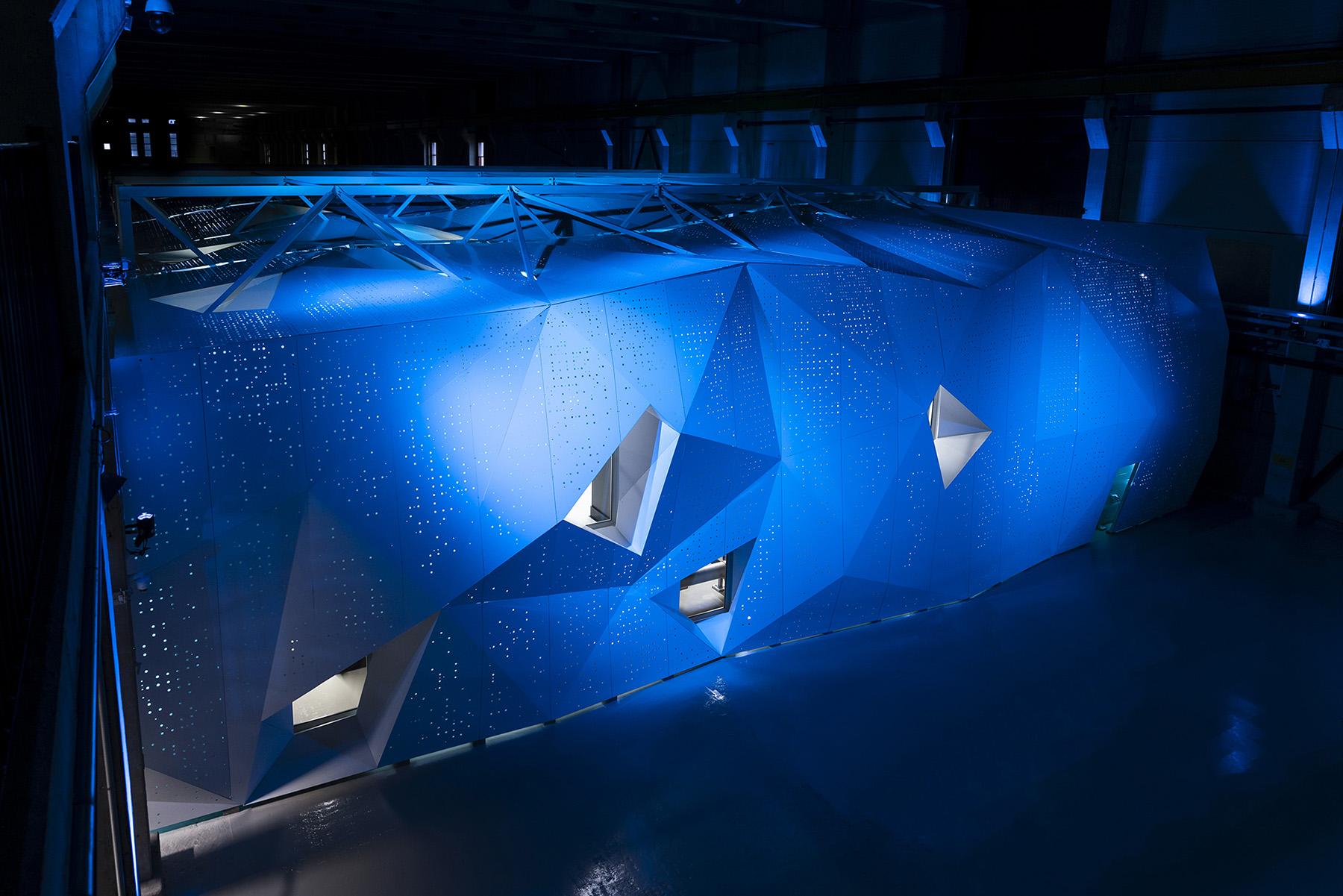
And this is the machine on which I have just started the first tests of my project.
A Czech gateway to European AI infrastructure
I want to thank Jakub Siwek from the National Supercomputing Center in Ostrava. When he asked whether I might need some computing power, I said yes immediately. A few days later, my first compute grant on LUMI was approved: 5,000 GPU hours.
This is important to say out loud. IT4Innovations National Supercomputing Center is not just a place with a big computer. It is a Czech gateway to top-tier European computing infrastructure. Thanks to the LUMI AI Factory, Czech companies, researchers, and innovators can access GPU and CPU compute time. For AI projects, this can be the difference between merely talking about large models and actually measuring, testing, and comparing them systematically.
Phase 0: does the whole chain work?
In the first phase, I was not trying to make a major breakthrough. The goal was much simpler: can I access the machine, submit a GPU job, run PyTorch, download a model, launch the first inference, and verify that vLLM can process prompts in batches?
In other words: does the whole chain work from my notebook to the first token from a GPU?
It does.
The first small language model, Qwen2.5-1.5B-Instruct, downloaded to scratch storage at 5.3 GB in 18 seconds, roughly 300 MB/s. For someone used to home internet, that is a pleasant start. I then ran the model on one MI250X GCD and started asking simple and slightly tricky questions, including: "What is the meaning of life?" and "What do you think about IT4Innovations National Supercomputing Center and the LUMI supercomputer?"
The results were exactly as interesting as I hoped. Sometimes the model answered nicely, sometimes in Czech, sometimes in English, and sometimes it hallucinated with great confidence. When asked about IT4Innovations and LUMI, for example, it invented locations, relationships, and facts.
That is not a failure of the experiment. It is exactly the behavior I want to measure systematically: when a small model is enough, when it is not, when hallucinations appear, and when it makes sense to escalate to a larger model or to a fusion of multiple models.
One prompt is not enough. Thousands are.
The performance for a single query looked modest: about 44 tokens per second. That is usable, but it is not dramatic for a supercomputer. A single query simply cannot keep the accelerator busy.
The change came when I used vLLM and ran 48 queries at once. Suddenly it became clear why this infrastructure is so useful for evaluation sets. With a batch size of 48, I reached 2,255.7 tokens per second in aggregate, roughly 51x more throughput than a single query, while each individual prompt still kept a similar speed.
In practical terms, an evaluation set of 1,000 prompts would run on this small model and one GCD in roughly a minute and a half.
This entire first validation used only about 0.1 GPU hour out of the allocated 5,000. In other words, the first working AI experiment on one of Europe's most powerful supercomputers took a negligible fraction of the allocation.
Why it matters
The main lesson of the first phase is simple. One prompt does not use a supercomputer. Thousands of prompts do.
If we want to measure the quality of language models seriously, compare small and large models, test answer fusion, or study when it is worth escalating to a more expensive model, this kind of infrastructure makes enormous sense. Not for a single nice demo, but for repeatable evaluation sets, robust logging, silent failure detection, evaluator calibration, and measuring quality against real compute cost.
Phase 0 was not about solving the core research question. It was about getting the basic machine running: access, containers, PyTorch, the first model, the first answers, the first hallucinations, the first measurements, and above all the first proof that batched prompt processing changes the economics of the whole project.
There is something beautiful about that. While I am trying to find out when a small model is enough and when a stronger model or a fusion of models is better, somewhere in Kajaani, Finland, waste heat from similar calculations is returning to the city.
Artificial intelligence does not have to be only an abstract cloud somewhere "out there". Sometimes it is a very concrete machine, in a concrete city, with concrete electricity, concrete heat, concrete Czech support from Ostrava, and concrete first experiments that begin with a question:
"What is the meaning of life?"