🧠 Do LLMs like ChatGPT reduce our brain activity and memory?
🧠 Do LLMs like ChatGPT reduce our brain activity and memory? A new study from MIT shows that when people inappropriately write essays with the help of artificial intelligence, their brains are less active, they remember less of what they wrote, and they feel less like authors of the text.
🧠 Do LLMs like ChatGPT reduce our brain activity and memory? A new study from MIT shows that when people inappropriately write essays with the help of artificial intelligence, their brains are less active, they remember less of what they wrote, and they feel less like authors of the text.
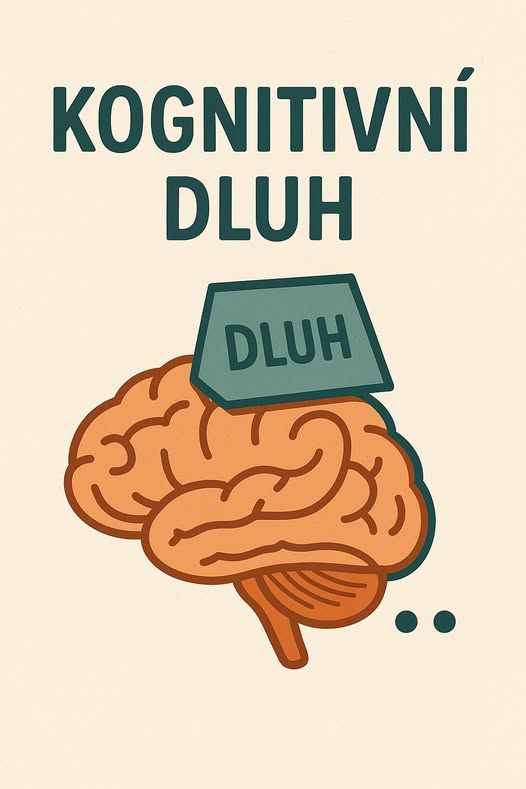
Almost 83% of participants could not recall a single sentence they had written with the help of LLMs (like ChatGPT). I have observed the same phenomenon over the past eight years with Czech students. I regularly ask them to briefly summarise in their own words what their work is about and ideally to mention a few important figures or quotes. Even though I am genuinely interested in their work, they tend to succeed in this more often than not. Researchers refer to this as cognitive debt; the brain seems to have become lazy because it has been replaced by AI.
📄 Interested in more? Check out the summary: https://news.mit.edu/2025/chatgpt-writing-cognitive-effects-0610
Or go straight to the study itself: https://arxiv.org/abs/2506.08872
🧠 This is actually another piece of the puzzle known as digital dementia – a state where technology begins to replace thinking, and we lose the ability to concentrate, reflect, and remember.
Digital dementia = 📉 The loss of the ability to concentrate, remember, and think deeply due to excessive use of technology. (Manfred Spitzer).
Google effect = digital amnesia = The tendency to forget information that we know is easily available online. → For example, instead of remembering a name or date, we know that "we can just Google it".
Mental outsourcing = Long-term reliance on tools (AI, calculators, maps) that diminishes our internal capacity to think, decide, or create. → Related to "cognitive debt", but more focused on the loss of autonomy.
Information obesity = infoobesity = Chronic "overeating" of information without reflection or utilisation. → A lot of data, but little wisdom. The result is passive consumption and internal overwhelm.
But technology doesn't have to be detrimental – it depends on how we use it.
✨ In the DigiHavel project https://odpovedneobcanstvi.cz/projekt/digihavel/ that we are creating with Odpovědné občanství, we do the opposite:
🗣️ Students engage in conversations with digital personalities – such as Václav Havel or Hannah Arendt. 🧩 They receive open tasks where they must seek solutions, think critically, and argue. 🧠 Artificial intelligence is not there to do it for them – but to challenge them to think more deeply.
Conclusion? It’s not about whether we use AI. It’s about whether we think while doing so.
If you are interested or teach and are looking for ways to work with AI meaningfully, feel free to contact me. I would be happy to share experiences from DigiHavel or other study materials.
🙏 Thank you to everyone who helps children think more with their own heads – even in the age of machines.
Originally published on Facebook — link to post
Original source: facebook