What does Pixlík see when he raises his paw? I took Atlas for a spin around a single image
In the picture from the castle, I see Raven the wolf in profile. A second later, I’m looking her in the eye over a little black cat’s shoulder. How did Atlas come up with a view I’d never shown it?
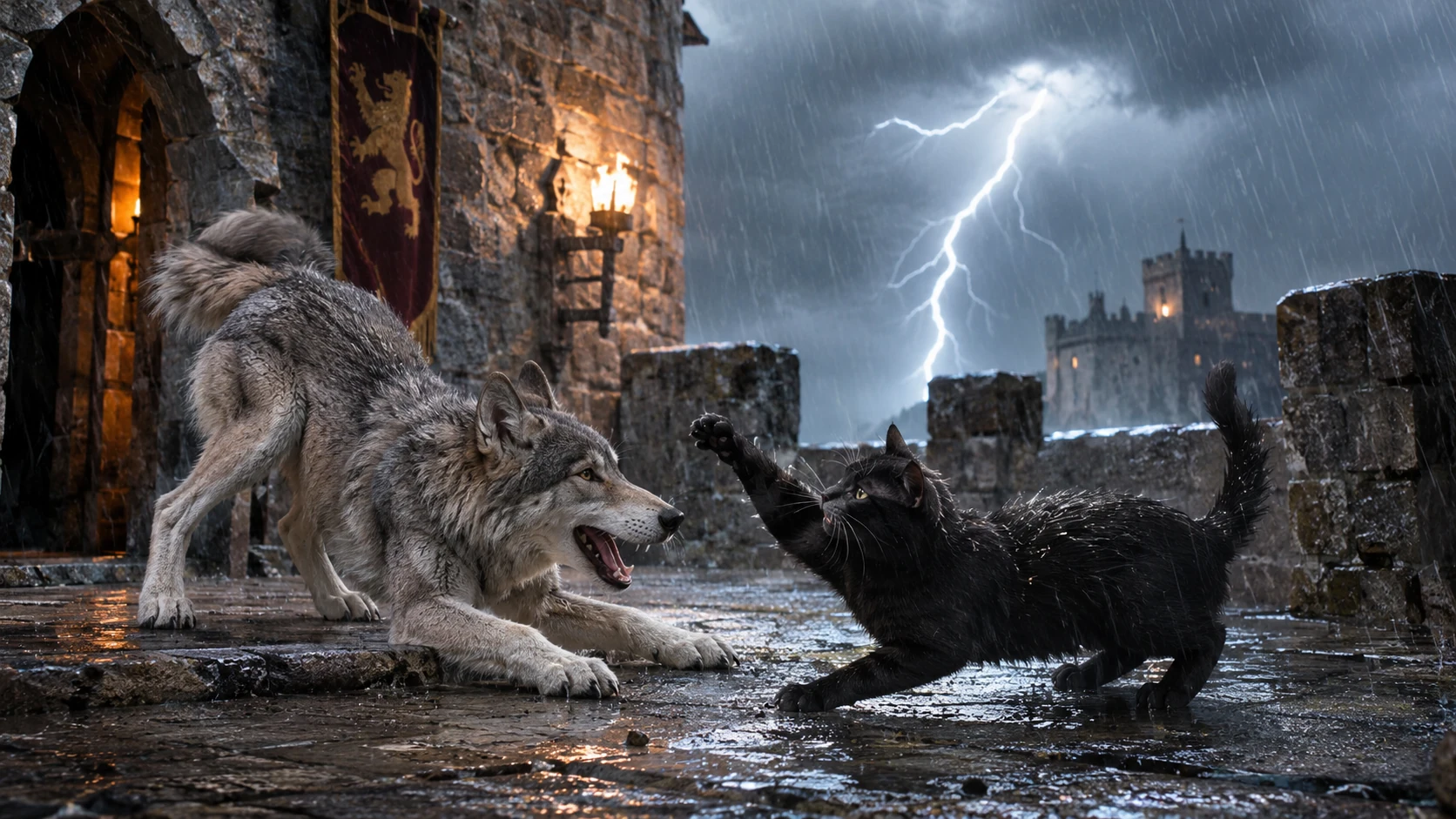
Rain is falling on the castle walls. Raven, a she-wolf, crouches on the wet stone as a little black cat named Pixlík reaches a paw towards her. I’d already had the picture generated. Curiosity made me upload it to Atlas, the world model from World Labs. What does Raven look like from where Pixlík is standing?
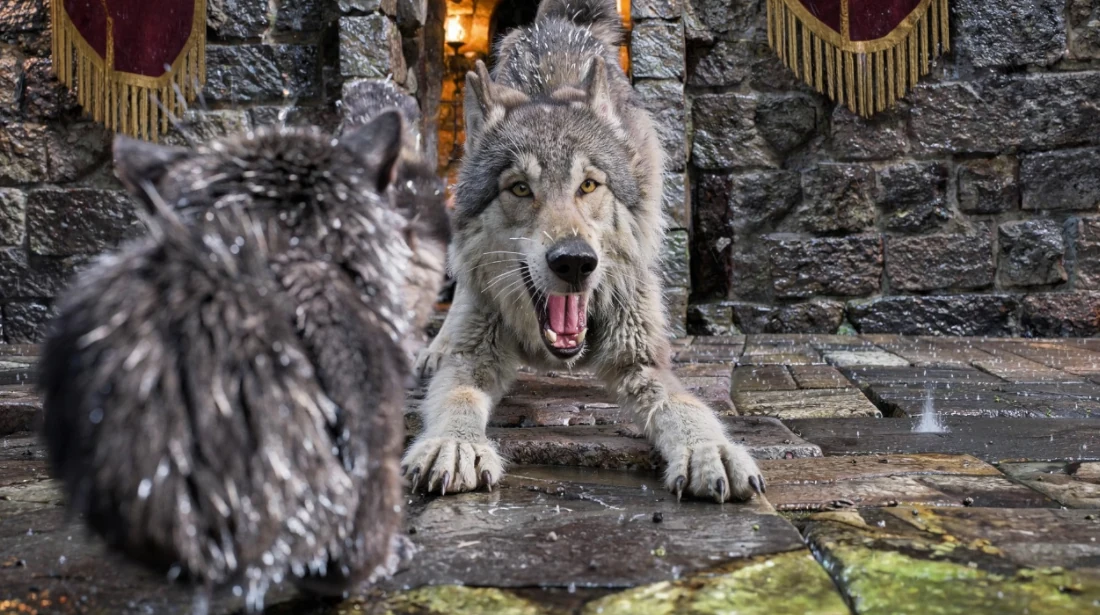
Play the four-second clip and pause it about a second in. Pixlík has his back to you. Look past his ears and you’re looking Raven straight in the eye, even though the original image showed her only in profile.
Where did the other side of the wolf come from?
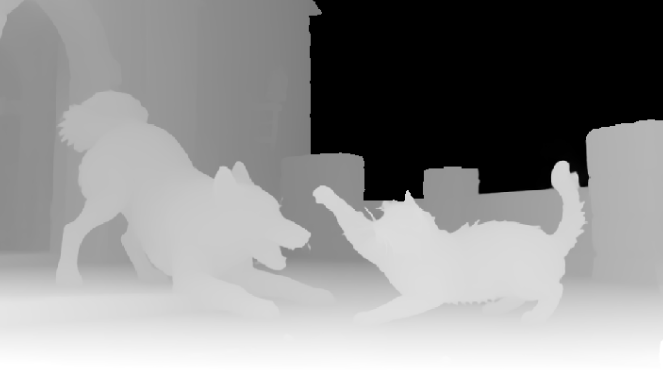
Atlas estimated the camera position from the image and produced two maps. One shows how far each part of the scene is from the camera. The other shows how confident the model is in each estimate. Pixlík’s raised paw stands out in the depth map below. Behind it are the battlements, then a tower further back, and finally the stormy sky.
In the Viewfinder editor, I set the camera to circle the two animals. Keep an eye on the paw and the distant tower. As the camera moves sideways, the paw travels across the frame much faster than the tower. That difference in motion gives the courtyard its depth.
My favourite detail is Pixlík’s back. The original image gave Atlas only a few clues to go on. As the camera moved behind the cat’s shoulder, the model had to fill in the pattern of his fur and the paving stones he’d been hiding. It looks convincing. If this were a real place, I’d check it against a second photo taken from the new angle. With an imaginary castle, all I have is the model’s version of the story.
When the camera circles an empty spot
For my second experiment, I used a wide shot I’d taken by a river. Setting up the scene cost 22 credits. The automatic orbit circled the spot where I’d stood to take the photo, leaving the dog and the woman off to one side. A short descent towards the water, ending at the dog’s eye level, made more sense. Viewfinder quoted 992 credits to render those four seconds, about a dollar at the published rate. Atlas pricing
What I’d try in a warehouse
The November issue of The Batch got me started on this experiment. World Labs, the studio AMD acquired in November, also lets you export a 3D scene from Atlas and keep working on it in a tool such as Blender. For now, I’m going by World Labs’ own tests when judging reconstruction accuracy. The Batch #380 · World Labs on Atlas · Exporting a 3D scene · AMD’s announcement
This gets me closer to answering a question about AI agents. Where can they learn by trial and error? I picture a warehouse worker who wants to move a rack and find out where two forklifts would end up meeting head-on. A few photos give them the layout to start from. Once they add dimensions, collision handling and rules for how the forklifts move, they can run a whole shift in the simulator as many times as they like. That’s where the Export button is worth more to me than the video itself.
You can try a small experiment at your desk. Photograph a mug from the front, have the model generate a view from behind, and only then walk around to check. Did it even get the direction of the handle right?